
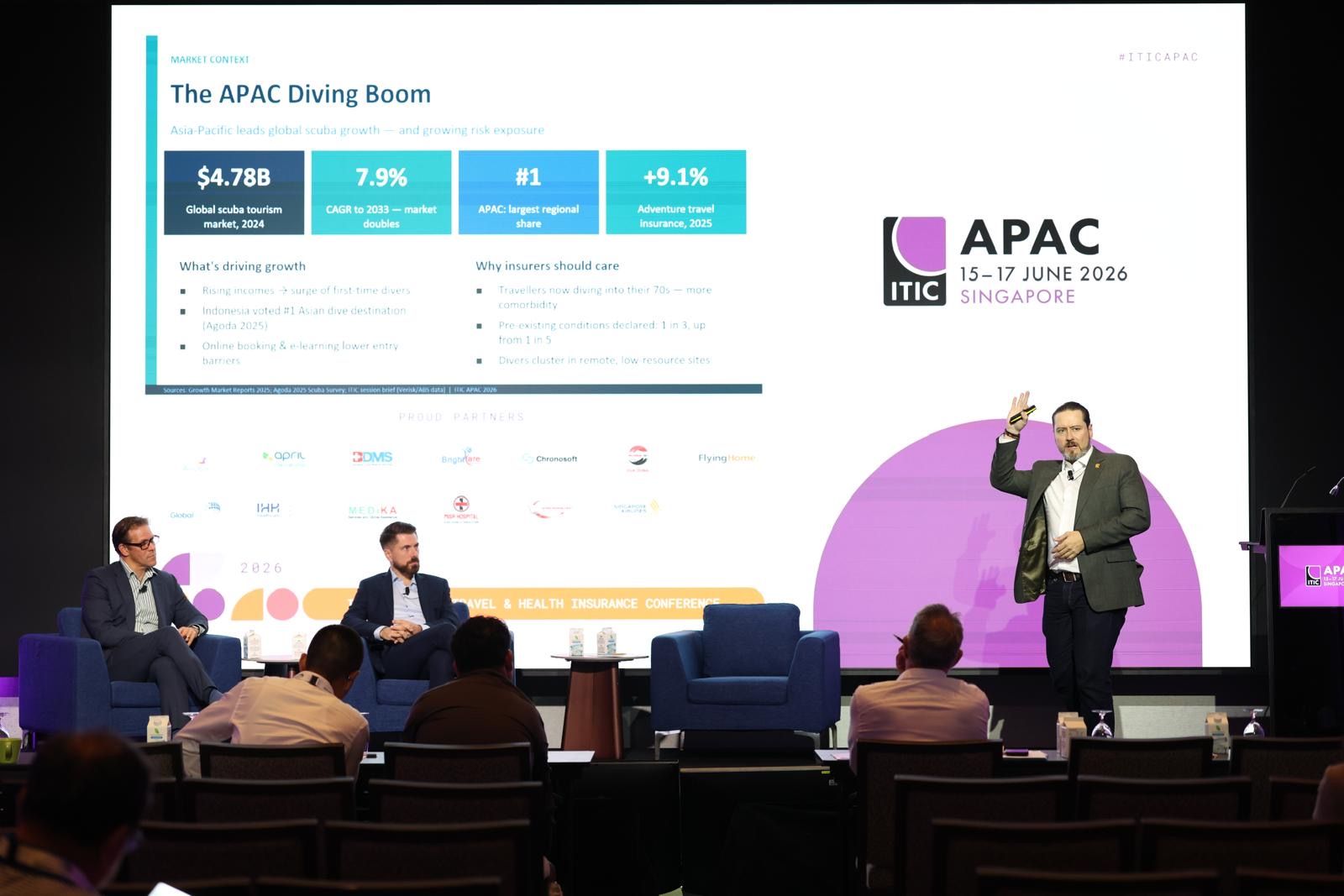
Health4Travel participating in an ITIC industry event in 2026.
Across ITIC Americas and APAC conversations in 2026, three operational themes keep coming up in Health4Travel's own meetings with insurers and Global Assistance teams: how quickly travellers can access outpatient care abroad, how clearly partners can see network and availability, and how much of the workflow can be handled digitally rather than by phone and email. This article shares how we think about those themes — not a summary of the events themselves.
Why outpatient care remains a central travel-health topic
Emergency response gets the headlines, but the day-to-day volume in travel health sits in outpatient care: consultations, minor injuries, dentistry, prescription refills, follow-up visits. It is where members most often need support, and where friction shows up most in assistance operations.
Theme 1: Faster access to outpatient care
The first recurring theme is speed. When a traveller needs an outpatient appointment abroad, the practical measure that matters is time-to-appointment — how long between the first call and a confirmed visit. Anything that shortens that path (clearer provider information, visible availability, fewer manual handoffs) is treated as an operational win.
Review question: How much time does your team spend moving from the first request to a confirmed appointment, and where does the process pause?
Theme 2: Better coverage and availability visibility
The second theme is visibility. Assistance teams and insurers want a clearer view of who can be booked where, at what price, and with what real availability — before starting coordination, not after. Coverage maps, structured provider information and up-to-date availability all feed into that.
Review question: Which details must an agent check before choosing an option—location, service, language, appointment time and price?
Theme 3: Structured digital workflows
The third theme is structure. Case notes spread across email, phone and provider portals slow teams down and make quality assurance harder. Structured digital workflows — where search, booking coordination and documentation live in one place — reduce unnecessary manual follow-up without replacing the human decisions assistance teams still own.
Review question: Who approves the booking, where is the confirmation recorded, and how does the team handle a change?
What these themes mean for insurers
For insurers, faster access and clearer visibility translate into better member experience and more predictable operational metrics. Structured workflows make it easier to review how outpatient cases are handled, regardless of whether assistance is run internally, by an external partner or in a hybrid model.
What they mean for Global Assistance teams
For Global Assistance teams, these themes are day-to-day operational reality: shorter case handling times, fewer avoidable back-and-forth calls, and clearer information available to agents at the moment they need it. The goal is not to remove agents from the loop, but to give them better tools.
Health4Travel's focus for 2026
Health4Travel is developing its platform around these three operational needs: speed of access, network and availability visibility, and structured workflows for assistance teams and insurers. Specific setup, integration and coverage scope are agreed individually with each partner.
Continue the conversation
If your team is thinking about outpatient care access, network visibility or assistance workflows for 2026, we would like to hear how you frame the same questions. Book a meeting with the Health4Travel team to compare notes on your markets and operating model.